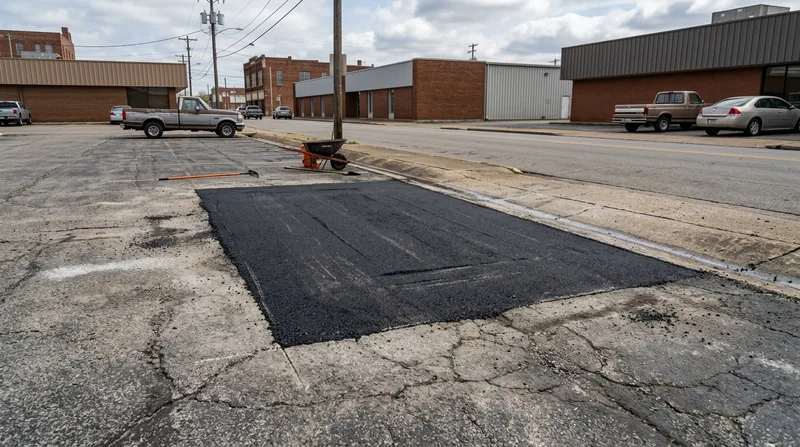




Parking Lot Repair & Resurfacing in Evansville demands more than filling cracks. Evansville's parking lots sit on alluvial and clay soils that shift with the region's 45+ inches of annual rainfall and spring flooding. When the base fails under heavy use, water infiltrates, the pavement settles unevenly, and cracks widen into alligator patterns. We cut out the failed section, rebuild the base with compacted aggregate, and patch it flush so it holds through the next wet season. The difference between a quick patch that fails and a repair that lasts is understanding the soil beneath the asphalt and whether the damage is surface or structural. This guide explains what parking lot failure looks like in Evansville, how we fix it, what it costs, and what to look for when you hire a contractor.
Why Parking Lot Failure Happens in Evansville: Soil, Water, and Freeze-Thaw
Parking lots around Evansville fail where the base has settled or washed out beneath the asphalt. The Ohio River valley and low-lying areas near the water sit on sandy, silty alluvial soil that moves with flood stage and standing water. Higher ground on the East Side and in Newburgh turns to dense clay that swells when wet and shrinks when dry. Both conditions stress the base. Add the region's heavy spring rains, periodic flooding, and freeze-thaw cycles, and the base can fail in 10 to 15 years even under moderate use. When the base fails, the asphalt above it cracks, settles, and eventually breaks apart. A parking lot that drains poorly or has standing water after rain is showing early signs that the base is compromised.
- Alligator cracking (a web of small, interconnected cracks) signals that the base has failed and the surface is breaking apart under traffic.
- Potholes and spalling (chunks missing from the surface) appear where water has infiltrated and frost heave has pushed the pavement up and cracked it.
- Settling and ruts show that the base or subgrade has compressed or washed away, leaving the asphalt unsupported.
- Seepage or standing water pooling in low spots means drainage is failing and water is weakening the base from below.
Catching these signs early means you can repair the failed section instead of resurfacing or replacing the entire lot.
Key info: Parking lots in Evansville near the river or in low-lying areas around Newburgh and Chandler are especially vulnerable to base failure because alluvial soils move with groundwater and flooding. Lots on higher ground in the East Side or in Boonville face clay expansion and contraction. Either way, early repair beats expensive replacement.
For more on the repair options available, see our page on Asphalt Resurfacing & Overlay to understand when an overlay will work and when you need full-depth repair.
A useful reference on parking lot maintenance and failure modes is available from the Federal Highway Administration's asphalt pavement guidance, which covers base failure and repair strategies used across the US.
How We Repair Parking Lots in Evansville: Step-by-Step Process
Parking lot repair starts with a clear diagnosis. We walk the lot, identify the failed sections, and determine whether the damage is isolated to a small area or spread across the pavement. For isolated failures, we remove the broken asphalt, inspect and rebuild the base, and patch it flush with the surrounding surface. For larger areas of alligator cracking or settling, we may recommend an overlay or full-depth replacement depending on the condition of the base and the overall lot. The goal is to give you the most cost-effective repair that will hold.
- We mark the failed section and cut it out cleanly, removing all broken asphalt and loose base material.
- We excavate to solid base, proof roll the subgrade to confirm it is stable, and grade it properly for drainage.
- We add compacted aggregate base in layers, ensuring proper density and pitch so water drains away from the patch.
- We heat and install new hot mix asphalt over the prepared base, matching the thickness and mix design of the existing lot.
- We compact the patch thoroughly so it is flush with the surrounding pavement and bonds tightly to the existing asphalt edges.
The patch is ready for light traffic within a few hours and full traffic within 24 hours, depending on air and pavement temperature.
Example: A small retail lot in Evansville's East Side had a 200-square-foot section of alligator cracking near the entry. We removed the broken asphalt, found the base was washed out and soft, rebuilt it with compacted stone, and installed a new patch. The repair took one day and cost a fraction of resurfacing the entire lot. The lot has held for years.
To learn more about when patching is the right choice versus resurfacing, visit our Pothole Repair & Asphalt Patching page, which covers the repair-versus-replace decision in detail.
Parking Lot Repair Methods: Patch, Overlay, or Full-Depth Replacement
| Approach | Description | Best for |
|---|---|---|
| Full-Depth Patch | Remove broken asphalt and failed base, rebuild base with compacted aggregate, install new hot mix asphalt patch flush with existing surface. | Isolated failures, small areas of alligator cracking, potholes, or settling where the base is compromised but the rest of the lot is sound. |
| Overlay | Mill or grind the existing surface to remove high spots and create a smooth profile, then install a new layer of hot mix asphalt over the existing base. | Lots with surface cracking, moderate rutting, or wear when the base is still sound and can support another layer of asphalt. |
| Mill and Patch | Mill out the failed section to the base, rebuild the base, and install new asphalt so the patch is flush with the milled surface. | Lots with scattered failed areas and surface wear, combining targeted deep repair with spot leveling. |
| Full-Depth Replacement | Remove all asphalt and base, excavate to subgrade, rebuild the entire base system, and install new hot mix asphalt from the ground up. | Lots with extensive alligator cracking, widespread base failure, poor drainage, or when the lot is past the point where overlay or patch repair will hold. |
The choice between these methods depends on the extent of the damage, the condition of the base, and your budget. A site visit and written estimate will clarify which approach makes sense for your lot.
Parking Lot Repair & Resurfacing Cost in Evansville: What to Expect
Parking lot repair costs depend on the size of the failed area, the depth of excavation needed, the condition of the base, and the method used. A small pothole or isolated patch might start at $650 to $1,200, while larger areas of alligator cracking or settling can run several thousand dollars. An overlay of an entire small lot (2,000 to 3,000 square feet) typically starts in the $3,000 to $5,000 range, and full-depth replacement is more. The key variables are:
- The size of the failed area determines how much asphalt and base material you need and how long the job takes.
- The depth of failure (surface crack, shallow patch, or full-depth base failure) affects excavation time and base rebuild costs.
- Soil conditions in Evansville's alluvial and clay zones may require extra base material or careful drainage design.
- Access and site logistics (whether we can stage equipment and materials easily) affect labor and equipment time.
- Urgency and weather can shift timing; spring and fall are the busiest seasons, and wet weather can delay work.
The best way to know your cost is to get a free written estimate that includes the size of the repair, the depth, the materials, and the labor. We provide detailed estimates with tonnage and thickness specs, so you know exactly what you are getting and can compare fairly with other contractors. Call (930) 212-2766 for a free estimate, or visit our pricing page for typical ranges on common repairs.
Always get 2 to 3 estimates. Avoid any contractor who quotes a price over the phone without seeing the lot, or who offers a price that seems too good to be true. The cheapest estimate often means thinner asphalt, lower-quality base prep, or skipped steps that will cause the repair to fail within a year or two.
Parking Lot Repair & Resurfacing Near Me: What Evansville Property Managers Should Know
Hiring a paving contractor for parking lot repair means finding someone who is local, insured, and willing to explain the work clearly. We are fully insured and have been in business since 2013, serving Evansville, Newburgh, Boonville, and surrounding areas. We provide written estimates with tonnage and material specs so you understand what you are paying for. Here is what to look for when you call any contractor:
- Ask whether the contractor is local and will stand behind the work if a problem comes up after the repair is done.
- Request a written estimate that includes the size of the repair, the depth of excavation, the base material and tonnage, the asphalt thickness, and the labor cost broken out separately.
- Check references from recent parking lot repairs in Evansville or nearby towns, and ask whether the repairs have held up and whether the contractor responded quickly to any issues.
- Verify that the contractor is fully insured and can provide a certificate of insurance; ask about workmanship warranty and what it covers.
- If your lot is in an HOA or commercial complex, confirm that any parking lot repair meets the architectural or operational standards of your development.
- Ask about the timeline, weather delays, and how the contractor will minimize disruption to your tenants or customers during the repair.
Permitting for parking lot repair varies by municipality. Some jurisdictions require a permit for any pavement work, while others do not. We help you navigate local permitting requirements and will coordinate with your city or county building department if needed. If you are unsure whether a permit is required for your lot, contact your local building department or call us at (930) 212-2766 and we can advise you. To get started, contact us for a free estimate or call us today.
Parking Lot Repair & Resurfacing in Evansville: Pricing Guide
| Service | Price | Details |
|---|---|---|
| Small pothole or localized patch | Starting at $650 | Includes excavation, base prep, and new asphalt patch for areas under 100 square feet |
| Medium patch or failed section | Starting at $1,200 | 100 to 400 square feet of failed asphalt and base, including full-depth repair and compacted base rebuild |
| Large area repair or mill and patch | Starting at $2,500 | 400 to 1,000 square feet of alligator cracking or settling, including selective milling and targeted base replacement |
| Overlay of small to medium lot | Starting at $3,000 | 2,000 to 3,500 square feet, includes mill and 1.5 to 2 inches of new hot mix asphalt over existing base |
| Full-depth replacement or extensive work | On estimate | Requires site inspection to assess base condition, drainage, soil type, and full scope of excavation and reconstruction |
| Free estimate and site visit | No charge | Written estimate with tonnage and thickness specs, response within 24 hours, no obligation to book |
Indicative pricing, the exact cost depends on square footage, finish, and site access. Free personalized estimate within 24h at (930) 212-2766.


