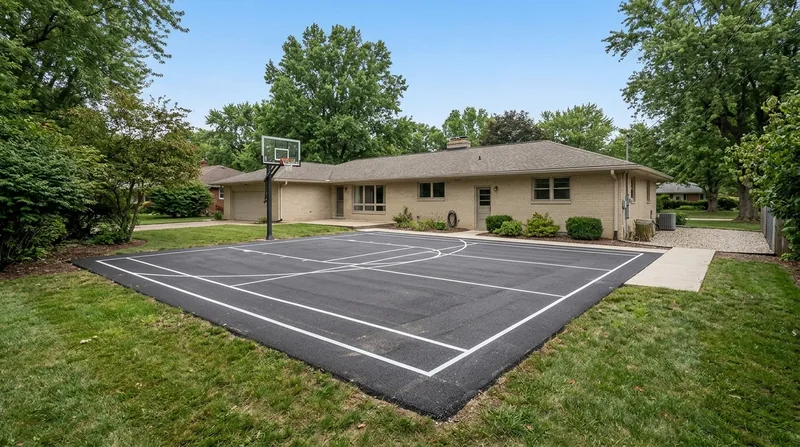




Sports Court & Path Paving in Evansville requires a foundation that handles both the dense clay of the East Side and the soft, shifting alluvial ground near the riverfront. Evansville's humid summers, wet springs, and over 45 inches of annual rainfall put real stress on a backyard court or path. A court that sits flat and drains properly in April, when the ground is saturated, and holds its surface through July heat is the difference between a court that plays for fifteen years and one that cracks and settles within five. We grade and compact a stable base, then finish with hot mix asphalt so your court stays true through Evansville's weather cycles. Whether you're building a basketball court in a Newburgh subdivision, a tennis surface in Highland, or a walking path on a riverfront lot in the historic neighborhoods, the base work is where the job is won or lost.
Why Sports Court & Path Paving Matters in Evansville's Varied Terrain
Evansville sits on two different soil zones, and that matters to every court and path we build. The river neighborhoods and low-lying areas near the Ohio River sit on sandy, silty alluvial soil that moves with flood stage and standing water. The East Side and outlying county ground turns to dense clay that swells and shrinks through wet springs and humid summers. A court built without accounting for that ground shift will crack, settle unevenly, and fail within a few years. Proper grading, compaction, and drainage are not optional here; they are the foundation of a court that plays flat and lasts.
- We assess soil conditions on your lot and size the base to handle both clay expansion and alluvial movement.
- We grade the site to shed water away from the court surface and prevent standing water and freeze-thaw damage.
- We compact the aggregate base in layers to create a stable platform that resists settling and rutting.
- We finish with hot mix asphalt at the thickness and slope required for sports play and long-term durability.
A properly built court in Evansville plays true for fifteen to twenty years with basic maintenance and no sealcoating for the first year while the asphalt cures.
Local example: A tennis court in Chandler on clay ground needs a thicker, more carefully compacted base than the same court would need in a drier climate. We size the base and slope to keep that court playable through March rains and June heat without cracking or rutting.
For more on how we handle ground conditions across Evansville, see our work on gravel driveway installation and grading, where base preparation is the core of the job.
How We Build a Sports Court or Path: Step by Step in Evansville
A sports court or path job starts with a site visit and measurement. We look at the ground, the drainage, the size you need, and how the court will tie into your property. We then lay out the work, move any topsoil or unsuitable material, and begin the base. The base is where the skill lives. We bring in crushed stone or recycled asphalt millings, spread it in lifts, and compact each lift with a vibratory roller until it is solid and stable. We proof roll the base, meaning we drive over it to confirm it will not rut or settle under the weight of play. Then we set the grade and slope, and finish with hot mix asphalt.
- We measure the site and confirm the dimensions, slope, and drainage path with you before we begin.
- We clear and grade the area, removing topsoil and any material that will not support the base.
- We bring in and compact the aggregate base in lifts, proof rolling to confirm stability.
- We set the crown and slope so water sheds off the court and does not pool at the edges.
- We finish with hot mix asphalt, compacted while hot to create a smooth, durable playing surface.
The entire job typically takes one to two weeks from start to finish, depending on weather and site conditions.
Example in Evansville: A basketball court in a Newburgh subdivision on clay ground required a four-inch compacted base, two inches of hot mix, and a one-percent slope to the east to shed water into a drainage swale. The job took eight working days and cost under twelve thousand dollars. The court has been in play for three years with no cracking or settling.
For related work on how we handle base preparation and compaction, see our page on asphalt driveway paving and installation, where the same principles apply.
Sports Court & Path Paving Methods and Materials
| Approach | Description | Best for |
|---|---|---|
| Hot Mix Asphalt Court | Compacted aggregate base (4 to 6 inches) finished with 2 to 3 inches of hot mix asphalt, crowned for drainage. | Tennis, basketball, and multi-sport courts; walking and cycling paths; high-traffic residential areas. |
| Recycled Asphalt Millings Base | Reclaimed asphalt (RAP) compacted as a stable base layer, finished with hot mix or left as a playing surface for informal courts. | Budget-conscious projects, informal play surfaces, and areas where new asphalt is not required. |
| Gravel Path with Compacted Aggregate | Crushed stone base compacted in lifts, no asphalt finish; suitable for low-traffic walking paths and utility routes. | Walking paths, property access routes, and areas where a permeable surface is preferred. |
| Tar and Chip Finish | Liquid asphalt binder sprayed on compacted aggregate and topped with stone chips; a lower-cost alternative to hot mix. | Secondary courts, informal play areas, and budget-limited projects where durability is secondary to cost. |
Each method is sized to the soil conditions on your lot. Evansville's clay and alluvial ground both require careful base compaction and proper drainage to prevent settling and cracking. We recommend hot mix asphalt for any court that will see regular play; it holds its surface and drains reliably through our wet springs and humid summers.
Sports Court & Path Paving Cost in Evansville: What to Expect
The cost of a sports court or path depends on the size, the ground conditions, and the materials you choose. A small basketball court or tennis court in Evansville typically starts at eight thousand to twelve thousand dollars. A longer walking path or a larger multi-sport surface can run fifteen thousand to twenty-five thousand dollars or more. The biggest cost drivers are the size of the area, how much grading and base work is needed, and whether you choose hot mix or a lower-cost alternative. Soft alluvial ground near the river may require a thicker, more carefully compacted base, which adds to the cost. Dense clay ground on the East Side is generally more stable and may cost less to prepare. The slope and drainage design also matter; a court that sheds water properly costs more to build but avoids costly repairs later.
We recommend getting two or three estimates from contractors who will measure your site and explain what base thickness and materials they are using. A written estimate should include the dimensions, the base material and thickness, the asphalt thickness, and the tonnage of material being used. For a full breakdown of our pricing across all services, see our pricing page.
We provide free, no-obligation estimates and respond within 24 hours. Call us at (930) 212-2766 to schedule a site visit.
Sports Court & Path Paving Near Me: What Evansville Homeowners Should Know Before Hiring
Hiring the right contractor for a sports court or path is about more than price. You want someone who understands Evansville's soil and weather, who will explain the base work and why it matters, and who will give you a written estimate with tonnage and thickness. Check that any contractor you call is fully insured and can provide references from recent work in Evansville or nearby towns. Ask whether they handle permitting or whether you will need to check with your city or village building department. Some municipalities require a permit for a court or path, especially if it involves grading or a change to drainage. If your property is in an HOA, verify that the architectural standards allow the court and the materials you plan to use. Ask about the warranty on the work; an honest paving contractor will offer a one to three year workmanship warranty, never a lifetime warranty on the asphalt itself.
- Verify that the contractor is fully insured and carries liability and workers' compensation coverage.
- Request a written estimate that includes the site dimensions, base thickness and material, asphalt thickness, and tonnage.
- Ask for references from recent projects in Evansville, Newburgh, or nearby towns.
- Confirm whether the contractor will help you navigate local permitting or whether that is your responsibility.
- Check your HOA rules if your property is in a master-planned community; architectural standards may govern materials and design.
- Avoid contractors who offer unsolicited door-to-door service, demand large cash deposits, or quote a price without visiting the site.
A local contractor with Evansville plates and a local address is the strongest trust signal in this trade. Call us at (930) 212-2766 or visit our contact page to request a free estimate and speak with someone who knows the ground and the weather in this area.
Sports Court & Path Paving in Evansville: Pricing Guide
| Service | Price | Details |
|---|---|---|
| Small Basketball or Tennis Court | Starting at $8,500 | Includes grading, 4-inch compacted base, 2-inch hot mix finish, and slope for drainage in Evansville. |
| Medium Multi-Sport Court or Longer Path | Starting at $12,000 | Includes site assessment, base preparation for clay or alluvial ground, thicker asphalt, and proper crown. |
| Large Court or Complex Grading | On estimate | Site-specific quote based on size, soil conditions, drainage design, and material selection after on-site visit. |
| Travel and Site Visit | Included | No mileage fee or call-out charge within Evansville and surrounding service areas; free estimate. |
| Estimate and Planning | Free | Written estimate with dimensions, tonnage, and materials; response within 24 hours at (930) 212-2766. |
Indicative pricing, the exact cost depends on square footage, finish, and site access. Free personalized estimate within 24h at (930) 212-2766.


