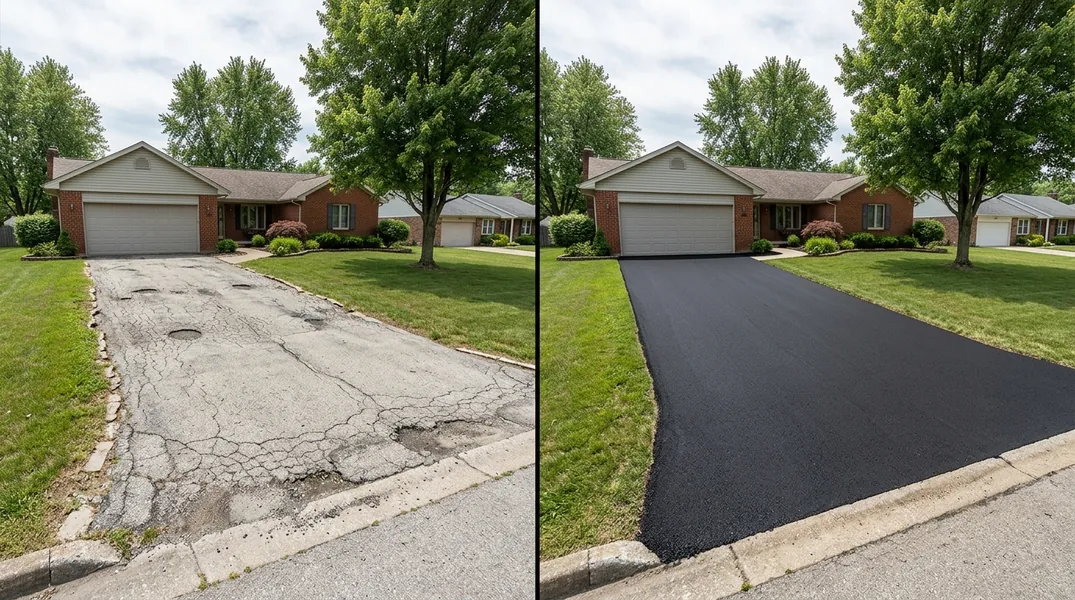
Understanding Your Driveway Damage: The First Step
When you notice cracks, potholes, or surface deterioration in your driveway, the immediate question that comes to mind is simple: can this be fixed, or do I need to start over? The answer depends on several factors, including the extent of the damage, the age of your asphalt, and your budget. Before you panic or make a costly decision, it's worth taking time to honestly assess what you're dealing with.
Driveway damage in Evansville can range from minor cosmetic issues to structural problems that compromise the integrity of your pavement. Small surface cracks, for example, are often cosmetic and can be sealed to prevent water infiltration. Larger cracks, alligator cracking (where the surface breaks into a web-like pattern), and deep potholes, however, signal deeper issues that may require more substantial intervention. The key is understanding which problems are candidates for Driveway Repair and which ones warrant a full replacement through Asphalt Driveway Paving & Installation.
When Repair Makes Sense: Catching Problems Early
If your driveway damage is limited to the surface layer or affects less than 30 percent of the total area, repair is usually the most cost-effective solution. Pothole Repair & Asphalt Patching can address isolated problem areas without disturbing the rest of your driveway. Similarly, if you're dealing with surface-level cracks or minor settling, targeted repairs can extend your driveway's life by several more years at a fraction of the cost of replacement.
The timeline for when you can use your driveway after repairs is much shorter than with new installation. Most patching and repair work allows you to drive on the surface within 24 to 48 hours, depending on weather conditions and the specific materials used. This makes repair an attractive option for homeowners who can't afford extended downtime. However, it's important to understand that repair is typically a temporary solution. If your driveway has suffered repeated damage or shows signs of base layer failure, you may find yourself making repairs year after year, ultimately spending more money than a single replacement would have cost.
When Replacement Is the Better Investment
Replacement becomes the smarter choice when your driveway has reached the end of its serviceable life. Most asphalt driveways last between 15 and 20 years under normal conditions in Evansville's climate. If your driveway is in this age range and showing widespread cracking, significant surface deterioration, or structural failure (such as large sections that have settled or separated), replacement through Asphalt Resurfacing & Overlay or full new installation is typically the most economical long-term solution.
When damage covers more than 30 percent of your driveway's surface, or when you have multiple problem areas scattered across the pavement, the cost of repeated repairs can quickly exceed the cost of a complete replacement. Additionally, a new driveway comes with the peace of mind that you won't face unexpected repair bills for years to come. You'll also have the opportunity to address underlying issues like poor drainage or base layer problems that may have contributed to the original damage, ensuring your new driveway performs better and lasts longer.
How Long for Asphalt to Cure and When You Can Drive on It
One of the most common questions homeowners ask is how long before you can drive on new asphalt. The answer is more nuanced than a simple timeframe. While asphalt may feel firm to the touch within 24 hours, it continues to cure and harden for several days after installation. For the first 48 hours, you should avoid driving on your new driveway entirely. This allows the asphalt to set properly and prevents tire marks or surface damage from vehicle weight.
After 48 hours, light driving is typically safe, but heavy vehicles, sharp turns, and prolonged parking should still be avoided for at least 7 to 10 days. The complete curing process can take up to 30 days, during which the asphalt continues to harden and become more resistant to damage. Weather plays a significant role in curing time. Cooler temperatures and high humidity can slow the process, while hot, dry conditions can speed it up. During the curing period, avoid parking in the same spot for extended periods, as this can leave marks or create soft spots in the still-curing asphalt.
New Asphalt Driveway Care: Protecting Your Investment
Once your new driveway is installed and fully cured, proper maintenance becomes critical to maximizing its lifespan. New asphalt driveway care begins with understanding that the surface is vulnerable to damage from UV rays, moisture, and chemical exposure. One of the most important steps you can take is to apply a seal coat within 6 to 12 months of installation. A seal coat creates a protective barrier that shields the asphalt from oxidation, water penetration, and minor surface wear.
Beyond seal coating, regular cleaning and prompt attention to small problems can significantly extend your driveway's life. Remove debris, leaves, and standing water promptly, as these can trap moisture and accelerate deterioration. Fill small cracks as soon as they appear to prevent them from expanding. Avoid using harsh chemicals or salt-based ice melt products during winter, as these can damage the asphalt. Instead, use sand or calcium chloride for traction. By investing time in proper care, you can often extend your driveway's life well beyond the typical 15 to 20 year window.
How Often to Seal Driveway: A Maintenance Schedule for Evansville Homeowners
How often to seal driveway is a question that depends on several factors, including your driveway's age, local climate, and traffic volume. As a general rule, you should seal your driveway every 2 to 3 years to maintain optimal protection. However, if you live in an area with harsh winters or intense UV exposure, you may need to seal more frequently. In Evansville, where winters can be cold and wet, sealing every 2 to 3 years is a reasonable target to keep your driveway in top condition.
The best time to seal your driveway is in spring or early fall, when temperatures are mild and the surface can cure properly. Avoid sealing during rain, extreme heat, or freezing temperatures. If you notice that your driveway is starting to look faded or that water is no longer beading on the surface, these are signs that the seal coat is wearing down and a new application is due. Regular seal coating is one of the most cost-effective forms of driveway maintenance and can save you thousands of dollars in repair or replacement costs over time. If you're unsure about your driveway's seal coat status or maintenance schedule, the team at Evansville Asphalt Paving can assess your driveway and recommend a maintenance plan tailored to your specific needs.
Making Your Decision: Repair vs. Replace
Deciding between repair and replacement ultimately comes down to three key factors: the extent of damage, the age of your driveway, and your budget. If your driveway is relatively young (under 10 years old) and the damage is limited and localized, repair is almost always the right choice. If your driveway is older and showing widespread signs of deterioration, or if you're facing expensive repairs repeatedly, replacement is likely the smarter long-term investment.
When you're ready to make a decision, don't hesitate to reach out to the professionals at Evansville Asphalt Paving. We can conduct a thorough inspection of your driveway, assess the damage honestly, and provide you with a detailed recommendation along with pricing for your options. Call us today at (930) 212-2766 or request a free estimate to get started. Our team has the expertise to help you make the right choice for your property and your wallet.
Looking for a professional asphalt paving contractor in Evansville? Evansville Asphalt Paving responds fast for all your asphalt paving needs.
Get a Free Quote